Liquidations Explained: Why Leverage Turns Dips Into Crashes
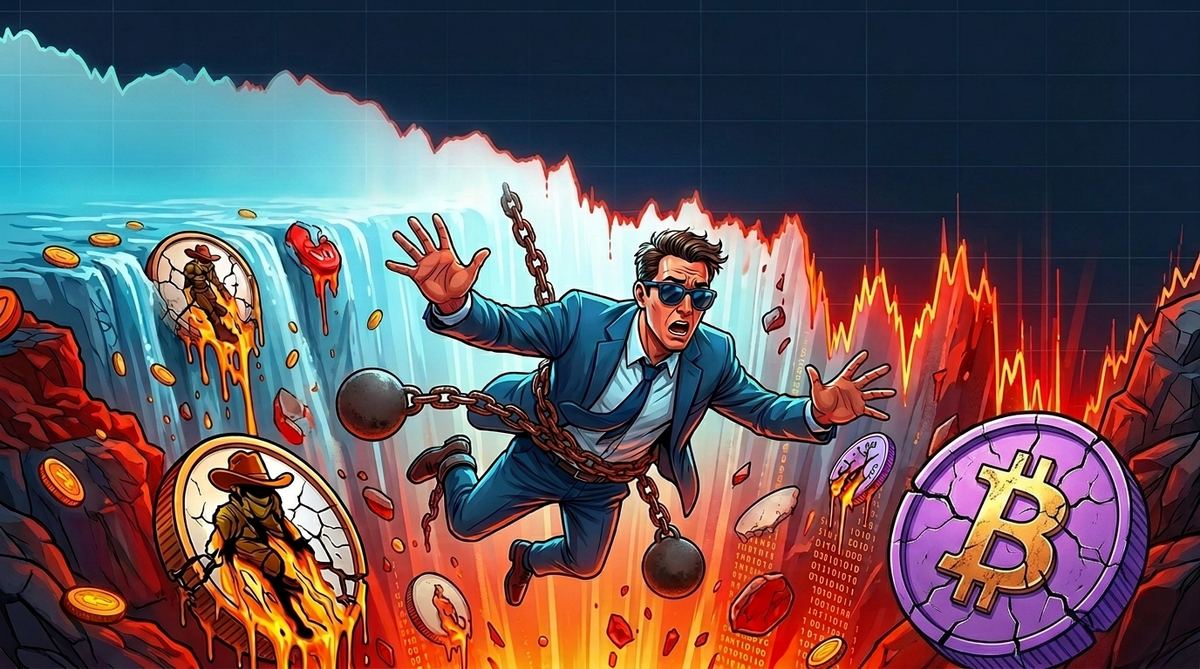
Some of the sharpest, fastest crypto declines aren't driven purely by new selling decisions — they're driven by a mechanical process called liquidation, which is worth understanding on its own terms.
What leverage actually means
Leveraged trading lets someone control a position larger than the cash they've put up, by borrowing the difference. This can amplify gains, but it equally amplifies losses — and critically, it introduces a point at which the exchange or platform will automatically close the position if losses reach a certain threshold, to protect against the borrowed portion.
Why liquidations cluster and cascade
When a price decline triggers one leveraged position's automatic close-out, that close-out is itself a sell order, which pushes the price down further — potentially triggering the next tier of leveraged positions, and so on. This is why declines involving significant leverage in the market can accelerate sharply in a short window, well beyond what the initial selling pressure alone would explain.
How this connects to panic selling
Liquidations and panic selling often reinforce each other: a liquidation cascade produces the kind of sharp, fast decline covered in our psychology explainer, which can trigger additional voluntary selling from participants without any leverage at all, who are reacting to the speed of the move itself rather than new information.
Spotting the pattern after the fact
A decline driven heavily by liquidations tends to show an unusually sharp, fast drop followed by a partial stabilization once the forced selling has worked through the market — a distinct shape compared to a steadier, more gradual decline driven by ordinary selling decisions. Checking a coin's detailed chart across a shorter timeframe, like 1H or 4H, often makes this shape more visible than the smoothed-out 24-hour figure alone.
← Back to Blog