aelf Security Incident Exposed a Dangerous Smart-Contract Trust Boundary
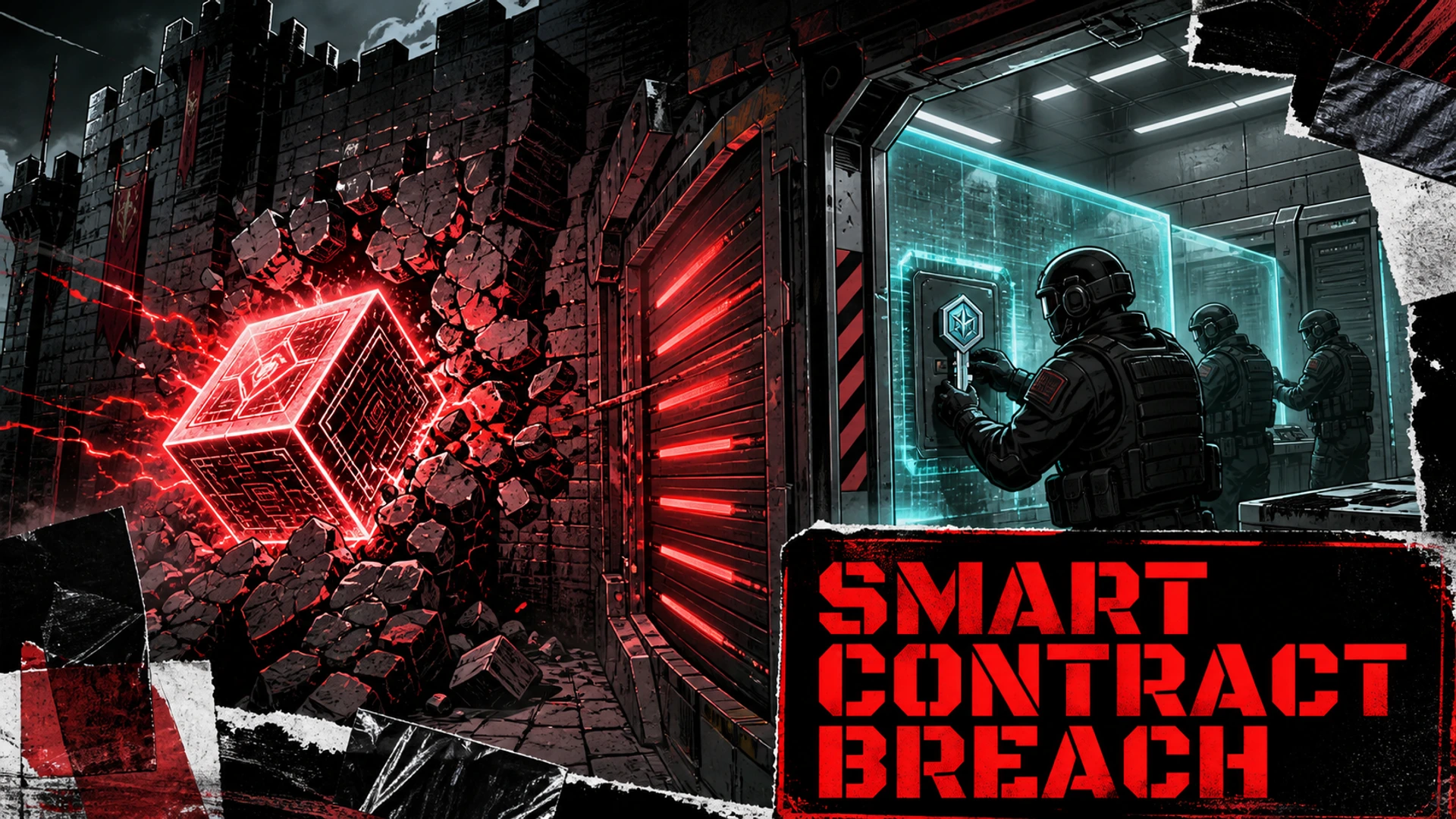
Blockchain project aelf is conducting a controlled recovery after identifying malicious smart-contract activity capable of reaching beyond normal contract logic into node execution environments. The incident matters because it highlights a critical security boundary: code submitted as a blockchain transaction should not gain meaningful access to the host systems running validators.
aelf says it has identified 155 transactions associated with the activity across AELF and its tDVV environment, plus five unique .NET payload assemblies. Node signing keys and infrastructure credentials accessible from relevant environments are being treated as potentially exposed while rotation, revocation, forensic review, and clean rebuilding continue.
What aelf has confirmed
The project’s current technical assessment is that an unauthorized smart contract could use transaction parameters to deliver encoded .NET assemblies and instructions into the contract-execution path. Analyzed payloads included capabilities for host command execution, result collection, attempted outbound communication, access to node-related key and configuration objects, and infrastructure reconnaissance.
Of the 155 transactions identified, 127 occurred on AELF and 28 on tDVV. The network remains in a controlled recovery process, and the project has warned that reachable public endpoints do not mean block production, transaction submission, bridges, exchange services, or other operations have formally reopened.
What remains unconfirmed
Capability is not the same as successful compromise. aelf has not established that every payload executed successfully on every node, that every targeted credential was obtained, or that sensitive information was transmitted. Those questions remain part of host, cloud, identity, and network forensics.
The project also says it has not identified evidence that ordinary user wallet keys were exposed or that the incident caused unauthorized transfers of ordinary users’ assets, based on its current review. That conclusion is provisional and does not cover unresolved exposure involving node and infrastructure credentials.
This distinction is essential. Reporting “payloads could access keys” as “all user keys were stolen” would be inaccurate. Reporting “no evidence yet” as “proof nothing happened” would be equally misleading.
Why the trust boundary failed
Smart contracts are supposed to run inside a constrained execution environment. They should be able to read permitted state, perform deterministic calculations, and update blockchain data—not behave like arbitrary host applications.
aelf’s update points to gaps involving runtime reflection and dynamic-loading paths, along with weak isolation between contract execution and sensitive node resources. In practical terms, the contract sandbox appears to have exposed capabilities that malicious code could attempt to turn into infrastructure access.
The lesson applies beyond one network. Blockchains using flexible virtual machines or general-purpose runtimes must treat the boundary between contract code and host systems as a primary security control. Auditing contract logic alone is not enough if the runtime can reach dangerous platform features.
Recovery is more than restarting nodes
aelf is rotating block-producer keys, revoking credentials, rebuilding clean environments, and validating containment. Those steps recognize that restarting from an uncertain host could preserve an attacker’s access or reuse compromised secrets.
Exchanges, bridges, custodians, node operators, and dApps have been told to wait for authenticated reopening guidance and verify signed builds, checksums, ledger status, and pending business records. Users should rely on official service notices rather than assuming that a working block explorer means normal operations have resumed.
How markets should interpret the incident
Security incidents can produce sharp price moves before facts are clear. Use the CryptoHeat heatmap, top losers, and trending assets to assess attention, but do not confuse market reaction with proof of technical impact.
The bearish case is obvious: unresolved infrastructure exposure can weaken confidence, delay services, and create costs for ecosystem partners. The constructive case depends on transparent forensics, verified remediation, independent review, and a disciplined reopening—not on optimistic messaging.
For broader context on how market participation confirms or rejects a narrative, see CryptoHeat’s volume and price guide and market overview.
What to watch next
Watch for the final root-cause assessment, evidence that permanent fixes close reflection and dynamic-loading paths, independent validation, completion of key rotation, and separate reopening notices for each service. Any confirmed asset loss or user action would materially change the story.
The practical takeaway
The confirmed issue is serious: malicious contract payloads reached a boundary where host-level capabilities were possible. The full impact is still under investigation. The responsible conclusion is neither panic nor dismissal—it is to wait for verified recovery evidence and treat node credentials as exposed until the project proves otherwise.
Sources & verification
Primary and supporting sources used to verify the material claims in this article:
- aelf — security incident response progress update
- aelf — initial network pause and upgrade announcement
CryptoHeat links to source material so readers can check the underlying announcement, filing, specification, or data directly. If a source is later revised, the current source should take precedence over a summary.
← Back to Blog