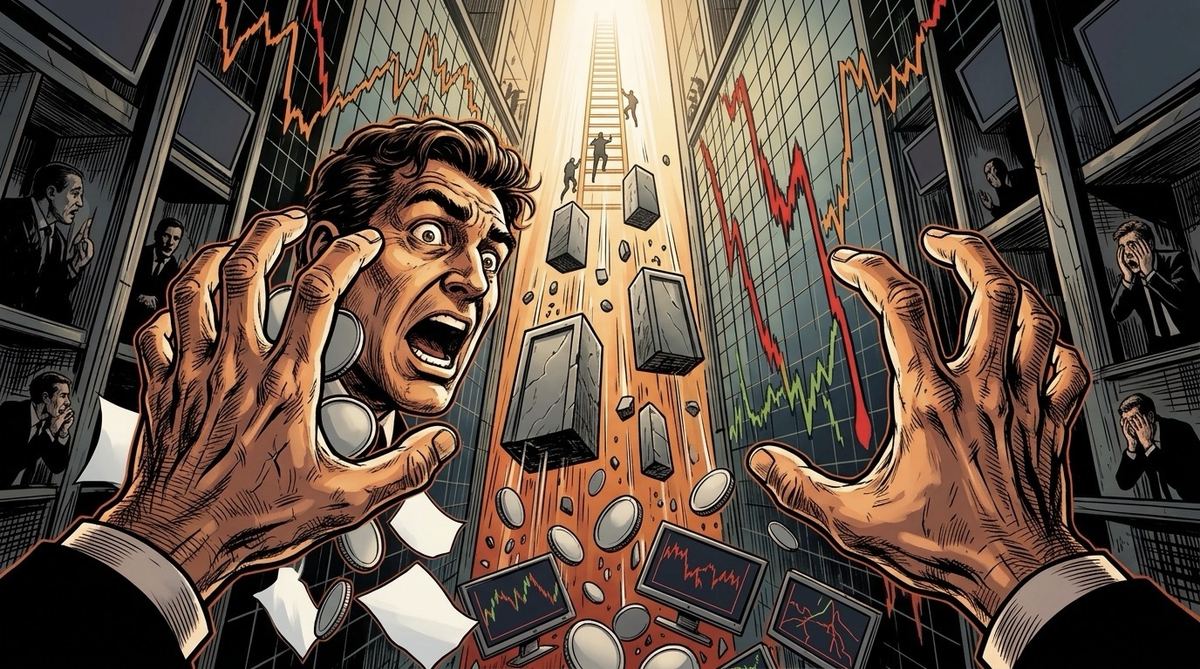
Behind every sharp, seemingly irrational price move, there's usually a recognizable behavioral pattern. Three of the most common have their own shorthand in crypto communities, and understanding them helps make sense of charts that otherwise look chaotic.
FOMO: fear of missing out
FOMO describes the pressure to buy into a rising asset simply because it's rising, driven by the worry that a bigger gain is being missed with every hour of hesitation. It tends to accelerate upward moves beyond what any specific news would justify, as more participants pile in reactively rather than based on independent analysis — which is part of why sharp rallies can extend further, and reverse harder, than the initial catalyst alone would suggest.
FUD: fear, uncertainty, and doubt
FUD refers to negative information, rumor, or sentiment — sometimes accurate, sometimes exaggerated — that spreads and pressures a price downward. Distinguishing genuine, material bad news from FUD that's overstated or unfounded is difficult in real time, and part of why prices can overshoot to the downside before stabilizing once clearer information emerges.
Panic selling
Panic selling happens when a decline itself becomes the trigger for more selling — participants exit not because of new information, but because the price is falling and they don't want to be the last ones out. This is closely related to the liquidation cascades covered in our liquidations explainer, where forced selling adds mechanical pressure on top of the psychological kind.
Recognizing these patterns in the data
None of these patterns are visible as a labeled event on a chart, but their fingerprints show up in the combination of price and volume: a move that's much larger than usual volume would typically produce, especially one disconnected from any specific news, often has a behavioral component layered on top of whatever started it. Checking overall market breadth is one way to tell whether a move is isolated psychology around one asset or a market-wide behavioral swing.