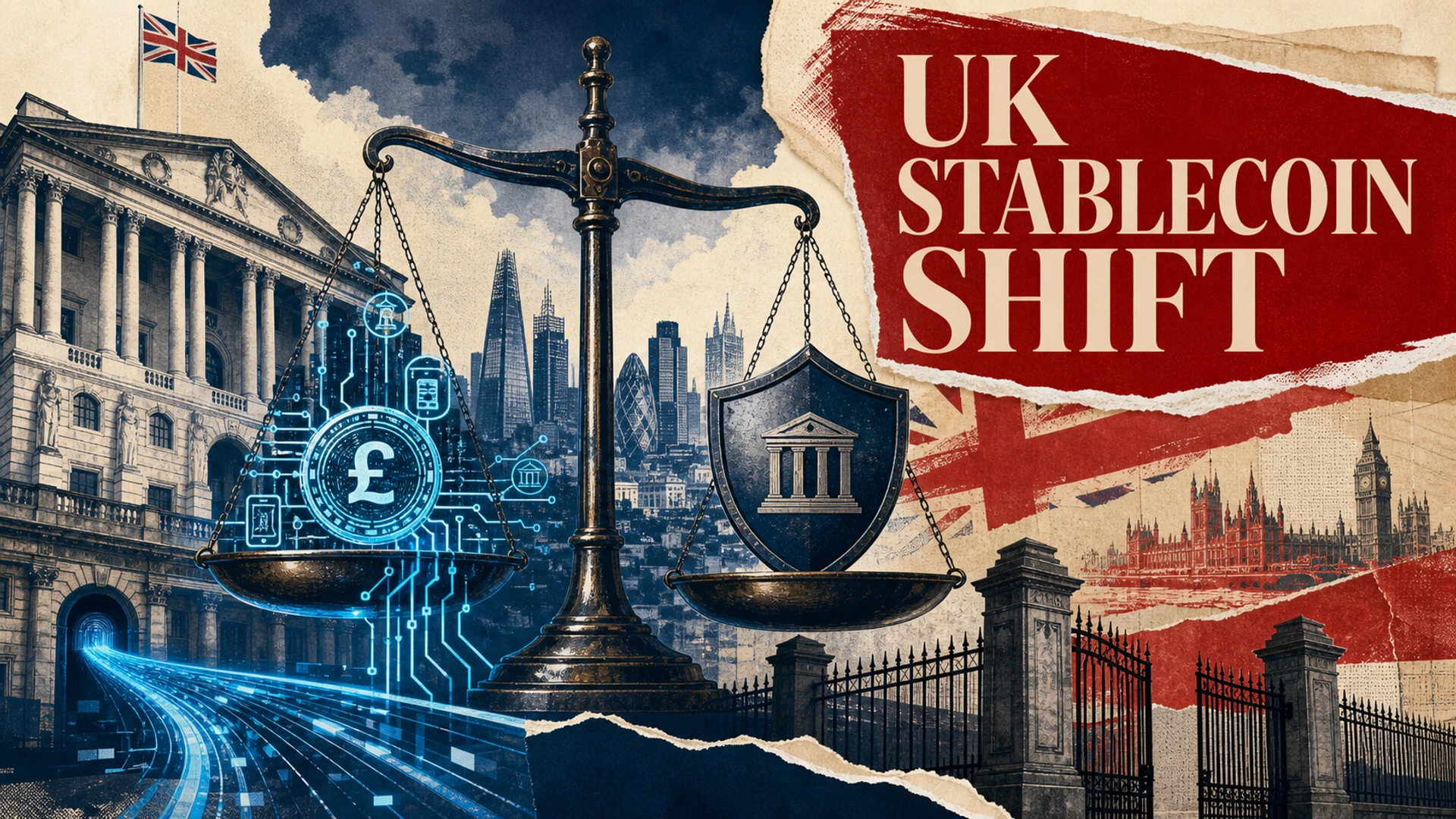
The UK government plans to give the Bank of England a new secondary objective to support innovation in payment systems and emerging forms of digital money. Stablecoins are explicitly within scope, making the proposal relevant to issuers, banks, payment companies, and crypto users watching Britain’s regulatory direction.
The central point is easy to misread. Financial stability remains the Bank’s primary objective. The planned innovation duty sits beneath it; it does not order the central bank to approve every stablecoin model or relax safeguards. Instead, it creates a formal expectation that payment oversight should consider whether regulation enables useful technology to develop safely.
What the UK government announced
HM Treasury said on August 27 that the government intends to extend an existing type of secondary innovation objective to the Bank’s supervision of systemic payment systems. That remit includes systems using digital settlement assets such as stablecoins.
The government expects to implement the change through amendments to the Financial Services and Markets Bill. The relevant legislation is scheduled for further House of Lords debate in September, so this is a policy commitment moving through Parliament—not a completed statutory change.
The Bank would report annually to Parliament on how it advances the objective. That reporting requirement matters because it would turn “support innovation” from broad messaging into something policymakers and industry can evaluate over time.
Why stablecoin firms are paying attention
Stablecoin regulation often involves a tradeoff between resilience and commercial viability. Issuers need liquid reserves and credible redemption arrangements, while overly rigid rules can make a product expensive or unattractive to operate. A formal innovation objective could encourage regulators to explain those tradeoffs and consider proportionate routes to scale.
For readers comparing token structures, CryptoHeat’s stablecoin guide explains how reserve-backed tokens attempt to maintain value. The UK proposal does not endorse a particular coin, and it does not change the risks of holding an issuer-backed asset.
What this does not change
The announcement does not make stablecoins legal tender, approve a new issuer, or replace the detailed rulebooks being developed by the Bank and the Financial Conduct Authority. It also does not subordinate financial stability to growth. The government states that the Bank would not be required to support innovation where doing so would undermine stability.
That boundary is important. Systemic payment instruments can create liquidity, operational, cyber, and redemption risks. The policy signal is constructive for innovation, but the practical outcome will depend on final legislation, implementing rules, supervisory decisions, and how quickly firms can satisfy them.
Possible market implications
The bullish interpretation is that Britain wants a payments regime capable of accommodating regulated digital money rather than forcing new models into outdated categories. Clearer expectations could attract issuers and infrastructure providers, especially if the UK offers a credible path from small-scale experimentation to systemic use.
The cautious interpretation is that a secondary objective may change regulatory process more than regulatory outcomes. Firms could still face demanding reserve, redemption, governance, and operational requirements. Policy language alone does not guarantee adoption or profitability.
Crypto investors should distinguish between growth in payment infrastructure and short-term token prices. Use the CryptoHeat market overview and live crypto heatmap to see whether stablecoin-policy headlines are accompanied by broader market participation.
What to watch next
First, watch the House of Lords debate and the exact amendment text. Second, watch how the Bank describes the relationship between innovation and its primary stability mandate. Third, follow final stablecoin rules and any timetable for issuer applications.
Attention may rotate toward payment and tokenization projects when regulatory milestones arrive. The trending coins page can show where interest is concentrating, while the top gainers and top losers help test whether a move is broad or isolated.
The practical takeaway
The UK is not removing the Bank of England’s guardrails. It is proposing a second lens: protect financial stability while also considering whether payment regulation gives responsible innovation room to develop. For stablecoins, that is a meaningful policy direction—but legislation and final supervisory rules will determine its real weight.