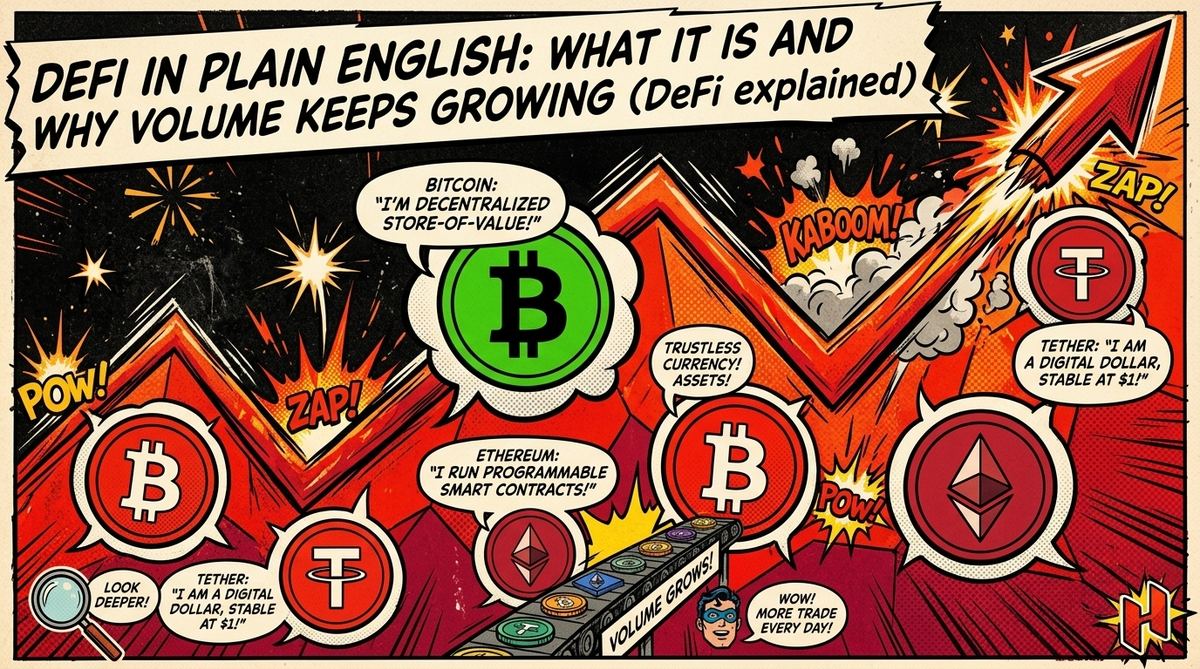
DeFi — short for decentralized finance — gets used constantly without much explanation of what it actually means in practice. Stripped of jargon, the core idea is simpler than it sounds.
The basic idea
DeFi refers to financial services — lending, borrowing, trading, and more — built directly on blockchain networks using smart contracts, rather than through traditional intermediaries like banks or brokerages. The programmable nature of platforms like Ethereum, covered in our Bitcoin vs. Ethereum comparison, is specifically what makes this possible.
Why "trustless" is the key word
Traditional finance relies on institutions to hold funds and execute agreements. DeFi applications instead use code that executes automatically according to pre-set rules, visible and verifiable on-chain. This doesn't eliminate risk — smart contracts can have bugs, and markets can still move against you — but it changes what kind of trust the system depends on.
Why volume keeps growing here
As more applications get built and more users interact with them, the trading and transaction volume flowing through DeFi platforms compounds — each new application adds its own activity on top of what already exists. This is part of why volume figures for platforms like Ethereum and Solana often reflect more than just direct speculation on the token itself; they capture an entire ecosystem's worth of activity.
What this means for reading the data
When a platform's volume is elevated relative to its market cap — the ratio covered in our market cap vs. volume piece — a meaningful part of that can reflect DeFi activity rather than pure token trading. Keeping this in mind adds useful context when comparing volume figures across different large-cap platforms.